
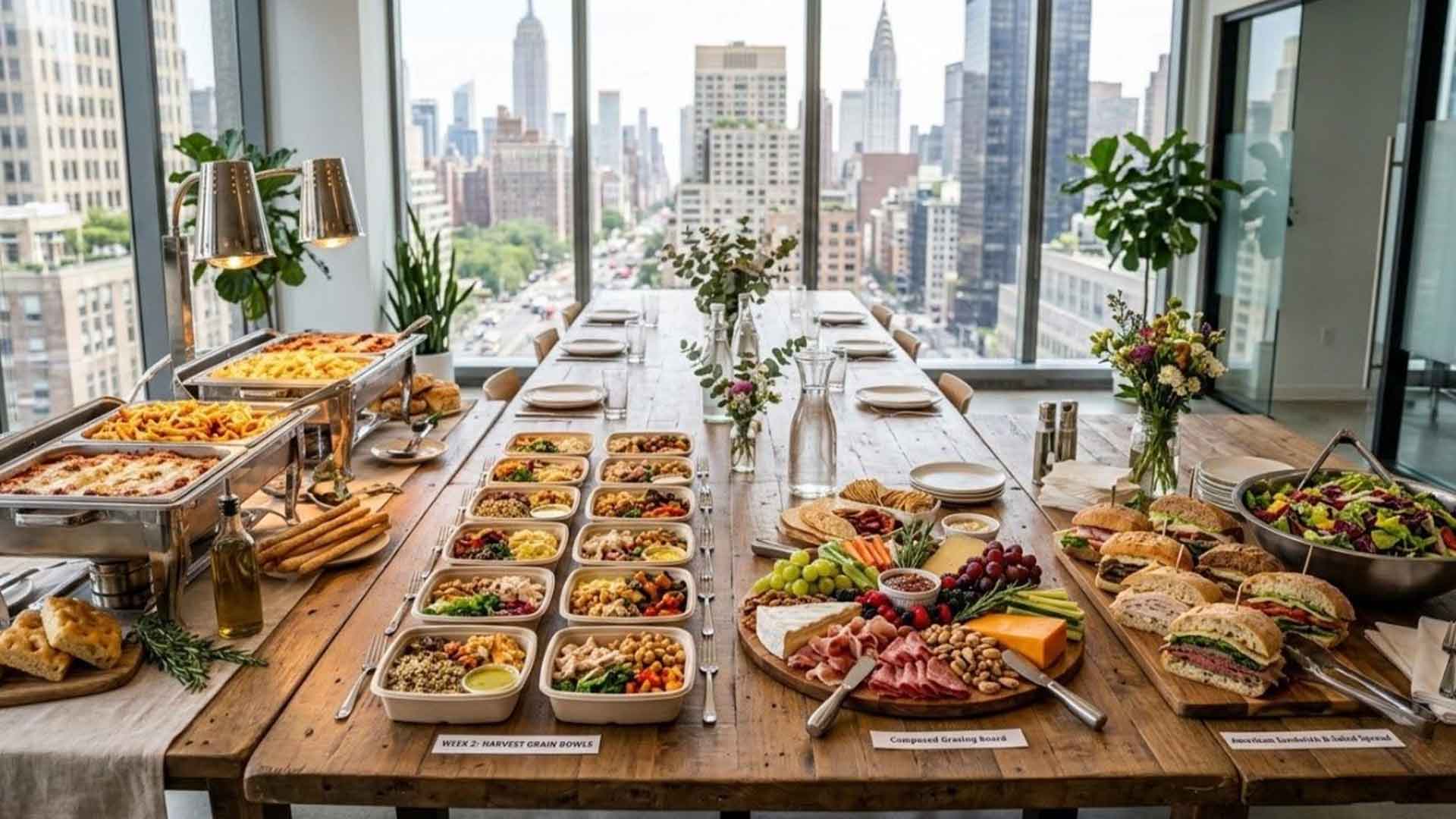
A weekly recurring office lunch order works for the first month. But as the standing order is repeated over time, it’s important to introduce variety across the rotation. The caterer should be able to offer a diverse menu so that four consecutive weeks each look meaningfully different, dietary coverage rotates through the calendar, and every lunch on the calendar is something the team looks forward to eating each week.
Here are four things to think about to help you create a diverse and inclusive catering rotation.
Group your menu options by cuisine — Italian, Mediterranean, American, Mexican, Asian — and treat each one as off-limits for the two weeks after you use it. An Italian buffet one Tuesday means no other Italian-leaning order until week three.
Two weeks is the working interval because that’s how long it takes a repeated cuisine to start feeling like repetition. One-week gaps get noticed; three-week gaps are excessive. Two is the sweet spot for a five-cuisine rotation that doesn’t feel forced.
A working four-week shape:
Five cuisines across four weeks leaves one in reserve for a seasonal swap or a request from the team.
In addition to varying the cuisine, you should vary how the food is offered.
Three formats to rotate across:
Running the same format every week is half the reason a rotation goes flat — even with cuisine variety, three weeks of the same buffet line starts to feel like the same lunch. Switch buffet to individual every other week and the rotation feels different even when the food itself is similar.
The single-order rule is easy: every order has a GF option and a vegan option. The harder rule, and the one most rotations miss, is that the GF and vegan eaters shouldn’t be eating from the same one or two options every week.
A rotation where the GF eater gets a real meal — not a side salad — every other week is the goal. That looks like:
Same logic applies to vegan, dairy-free, and nut-free. The rotation is what makes dietary coverage feel respected over time — not the checkbox on any one order.
Work closely with the caterer in advance to ensure that the following are in place before the weekly orders begin:
Once your caterer has all of that, they can flag conflicts in advance (Mediterranean week falls on a Greek holiday menu the kitchen is featuring, or grain bowls are short a salmon protein that month) and propose swaps without you having to think about it.
Metro has been running workplace dining for Midtown offices since 1981. The 2026 menu is built deep enough across cuisine, format, and dietary coverage to support a four-week rotation without repeating itself, and every standing program is assigned a dedicated account contact who manages the pattern alongside you.
To set up a rotation, reach out to your Metro contact or place the first order through the order portal and ask about a recurring schedule. Most rotations get locked in across a single 30-minute conversation.
Author
Chris Zamfotis
Managing Partner, Metro Catering
Chris Zamfotis is the Managing Partner at Metro Catering, a New York City catering company serving corporate offices, private events, and businesses across Manhattan. With a focus on reliable service, thoughtful menu planning, and polished presentation, Chris helps lead Metro Catering’s approach to modern corporate catering, from daily office lunches to executive meetings, happy hours, and large-scale events.

Metro Catering has been NYC’s trusted corporate catering provider since 1981, offering fresh, high-quality meals for office lunches, corporate events, and workplace dining—delivered on time, every time.

