
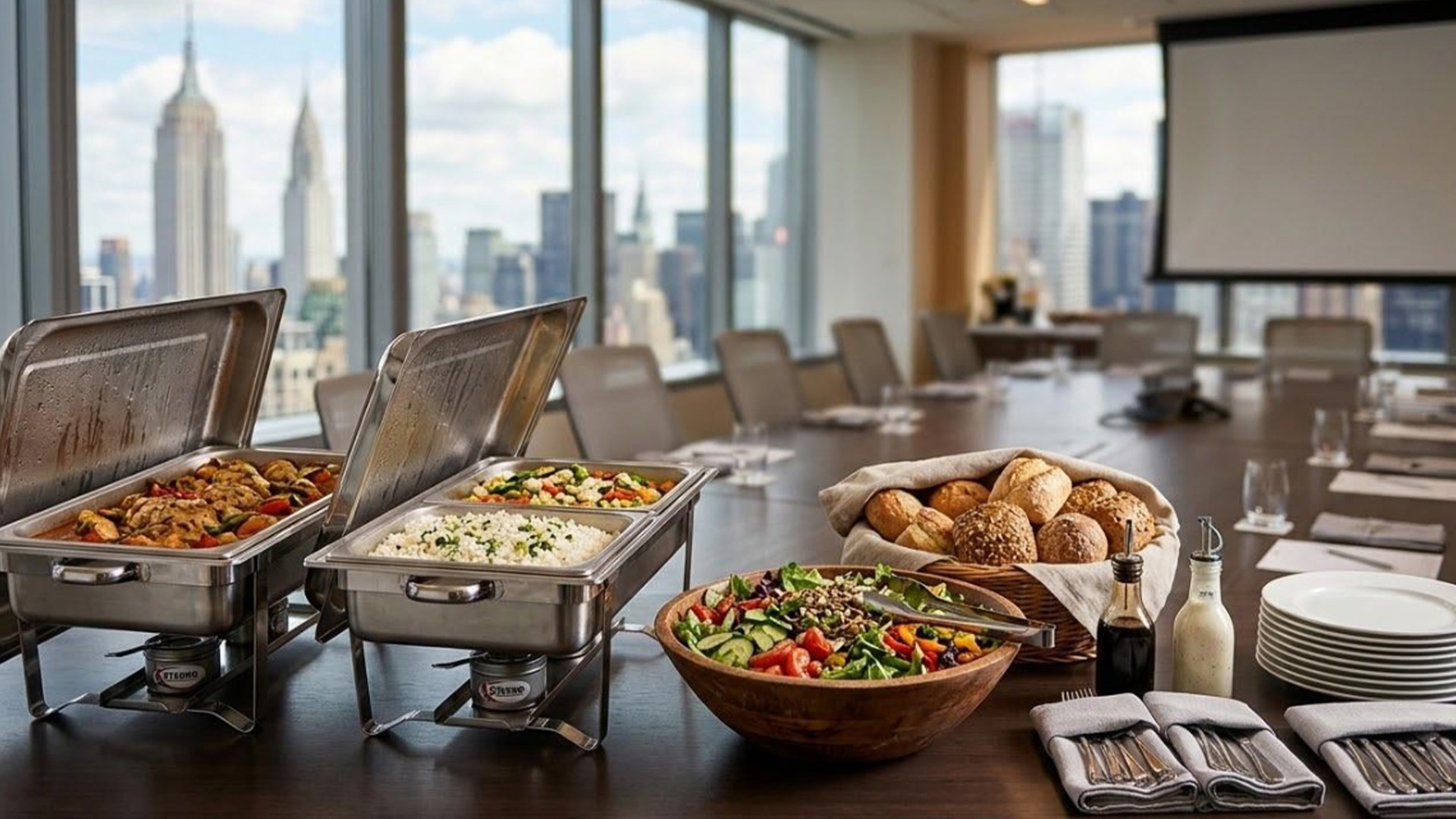
As the person responsible for catering, you’re running one of the most visible parts of your team’s workday. Picking the right vendor, managing the order, handling dietary coverage, and coordinating on the day takes real work — and the result shows up at every meeting. This post focuses on one piece of that work: how to evaluate your caterer during the hour the service actually happens.
That hour runs between 11:30 and 12:30 for a typical noon service. From the moment the truck arrives to the moment the cart leaves, you can watch each point of the hour from your seat and tell whether the caterer is performing — without needing to know what happened in the kitchen.
The hour breaks into five points: arrival, setup, service open, mid-service check, and close. The sections that follow tell you what to look for at each one. You’ll know what good lunch service looks like at every part of the hour, and what to do when something isn’t going right.
If you’ve already got a caterer, this tells you whether they’re doing the job. If you’re hiring a new one, these are the questions to ask on the first call. Either way, the hour from 11:30 to 12:30 is the test.
The caterer should be in the building. Truck at the loading dock or curbside, captain at the security desk, order on a cart and ready to come up.
What to look for:
If they’re late, you should hear from the caterer before you notice. Metro’s account contact calls the office the moment the truck is behind schedule. From the kitchen at 21 W 38th St, the truck is usually in single-digit minutes across Midtown.
The buffet should be coming together by 11:45.
What to look for:
If setup is still being assembled at 11:55, ask the captain what’s missing. If it’s a missing item from the order, call your caterer’s account rep. The window to solve a problem closes at noon.
People start eating. The first three minutes tell you whether the setup will hold up.
What to look for:
If the line bottlenecks at one item — the salad station, the hot entrée — the captain should move that item to its own station, or split it across two. In under two minutes, before the back of the line stalls.
Halfway through. This is where service either holds or falls apart.
What to look for:
If a popular item is gone by 12:15 and there are twenty people still coming, note it. The count for next time needs adjustment. During service, the move is to call the caterer. Flagging it with the captain in front of guests doesn’t help.
The window is closing. What good looks like:
The check-in is the reorder conversation that doesn’t have to happen later by email. A captain who skips it loses information that would have made the next order more precise.
If you’re evaluating a new caterer, ask about all of this on the first call:
You’re listening for clean answers. Hesitation tells you what experience the caterer actually has.
Metro has been running corporate lunch in Midtown since 1981. The kitchen at 21 W 38th St means the truck is in single-digit minutes across the neighborhood, not coming in from a hub outside Manhattan. Every workplace dining program is assigned a dedicated account contact from week one. That’s the person who picks up the phone when something’s off.
For a lunch this week, place the order at least one business day in advance. To set up a recurring program or plan a corporate event, the catering team can walk through cadence, format, and dietary options before you commit to anything.
Author
Chris Zamfotis
Managing Partner, Metro Catering
Chris Zamfotis is the Managing Partner at Metro Catering, a New York City catering company serving corporate offices, private events, and businesses across Manhattan. With a focus on reliable service, thoughtful menu planning, and polished presentation, Chris helps lead Metro Catering’s approach to modern corporate catering, from daily office lunches to executive meetings, happy hours, and large-scale events.

Metro Catering has been NYC’s trusted corporate catering provider since 1981, offering fresh, high-quality meals for office lunches, corporate events, and workplace dining—delivered on time, every time.

