
Here's what to think about when setting up office breakfast — whether it's a one-time meeting or a recurring program.
The working baseline for coffee is one and a half cups per person at a morning event — people finish a first cup before the meeting starts and come back for a second. If you order too little, you'll run out of coffee by 8:45.
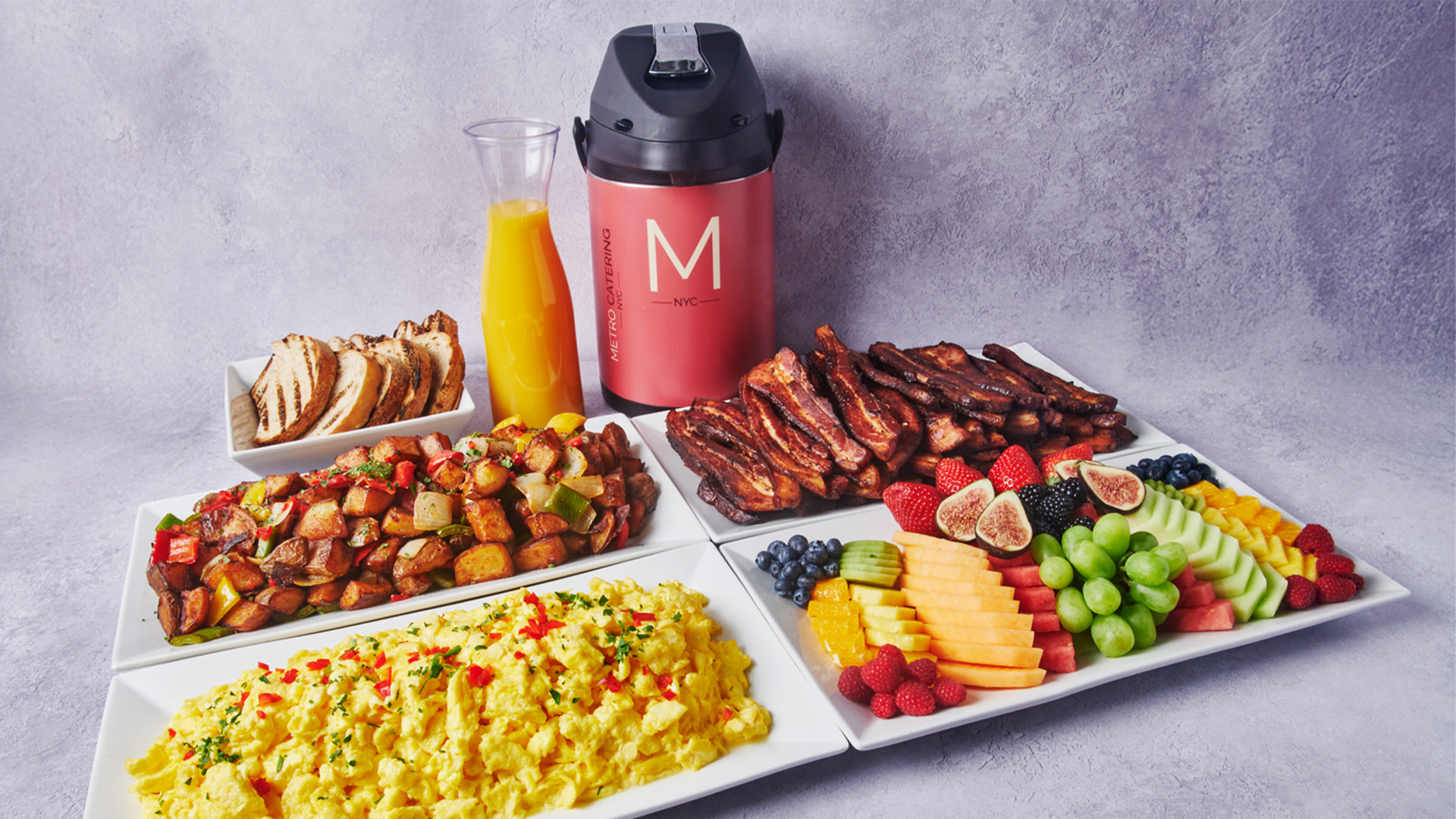
Food quantity depends on the format. A pastry-and-bagel package like Metro's Breakfast Package #1 (mini muffins, croissants, pastries, bagels) runs roughly three pieces per person. A hot package like Breakfast Package #6 (scrambled eggs, country potatoes, breakfast meat) is one full plate per person, plus a 10–15% buffer for second helpings on bacon and sandwiches.
For a recurring program, build the count off the headcount that actually shows up, not the total team size. The 9 AM standup with 30 RSVPs and 22 attendees doesn't need 30 servings of eggs.
Drop-off works when someone in the office can lay it out, top off coffee, and clear it after. That often means a recurring breakfast where one person on the office side handles the routine each week — ten minutes of work and nobody has to think about it.
Attended setup is for everything else: client breakfasts, all-hands meetings, hot breakfast that needs chafing dishes, or any service where the host needs to be in the meeting and not at the buffet. The captain handles the setup, restocks coffee, replates as the food goes down, and clears.
Three things shift when breakfast becomes a recurring program:
Coffee covers maybe two-thirds of the office. The other third needs something else, and skipping it is how you get a meeting where a third of the room has no drink.
A working baseline alongside coffee: hot tea (English breakfast and one herbal), fresh-squeezed juice, sparkling and still water. Add an iced option in summer months.
Vegetarian and gluten-free options should be on the order from week one, not added after someone complains. Brief the caterer on dietary needs at order time — adding them after the fact is harder.
The dietary coverage on Metro's breakfast menu is built into the lineup: Breakfast Package #1 Gluten-Free, the Vegan Breakfast Grazing Board, and the Breakfast Bowl Energy with egg whites, sweet potatoes, and whole grains.
Breakfast that arrives at 8:30 for a 9 AM meeting cuts it close. The captain is still pulling chafing dishes out of the cart when the 8:45 stragglers walk in for coffee. The working rule is 45 minutes before service for a continental, 60 minutes for a hot breakfast that needs chafing setup.
Lead time matters more than the arrival window. Metro's cutoff for next-day orders is 3 PM the day before; same-day is possible but limits format choices. The kitchen at 21 W 38th St means breakfast arrives in single-digit minutes across Midtown — the schedule is easier when the truck isn't fighting commuter traffic in from Long Island City.
The honest comparison: a continental breakfast for 20 people runs roughly the same as sending one person on a coffee-and-bagels run, plus the cost of that person's hour. The catered order brings what the coffee run doesn't — coffee that doesn't run out, food that's plated, and someone other than your team handling the cleanup.
A recurring program costs less per head than one-off orders because the setup and captain time are built into the standing schedule rather than billed fresh on every order.
Metro has been running breakfast service for Midtown offices since 1981 — continental spreads, hot breakfasts, breakfast sandwiches, and full coffee service. Every program is assigned a dedicated account contact from week one.
If you're setting up a workplace dining program, the team can walk through cadence, format, and dietary options before you commit to anything. For one-time meetings or corporate events, the catering team can plan it with you directly.
For breakfast next week, place the order at least one business day in advance.
Author
Chris Zamfotis
Managing Partner, Metro Catering
Chris Zamfotis is the Managing Partner at Metro Catering, a New York City catering company serving corporate offices, private events, and businesses across Manhattan. With a focus on reliable service, thoughtful menu planning, and polished presentation, Chris helps lead Metro Catering’s approach to modern corporate catering, from daily office lunches to executive meetings, happy hours, and large-scale events.

Metro Catering has been NYC’s trusted corporate catering provider since 1981, offering fresh, high-quality meals for office lunches, corporate events, and workplace dining—delivered on time, every time.

