
When a corporate event runs right, the room fills, the food arrives at temperature, the conversation hits its stride, and at some point the guests stop noticing that anything is being managed at all. That last part is the goal — and it's the hardest part to plan for.
For an event planner running a client-facing event, planning for the event is even more important than work you do during it. Three layers of those decisions matter most: the room setup, the guest experience, and the back-of-house.
Three decisions you make about room setup carry the most weight.
Station placement is the first. Where the bar sits in relation to the entrance, where food stations sit in relation to the bar, and where seating clusters fall in relation to both — these positions help direct the flow of the room. A good catering captain walks the floor plan with the planner before the day of, identifies potential bottlenecks, and positions stations to avoid them.
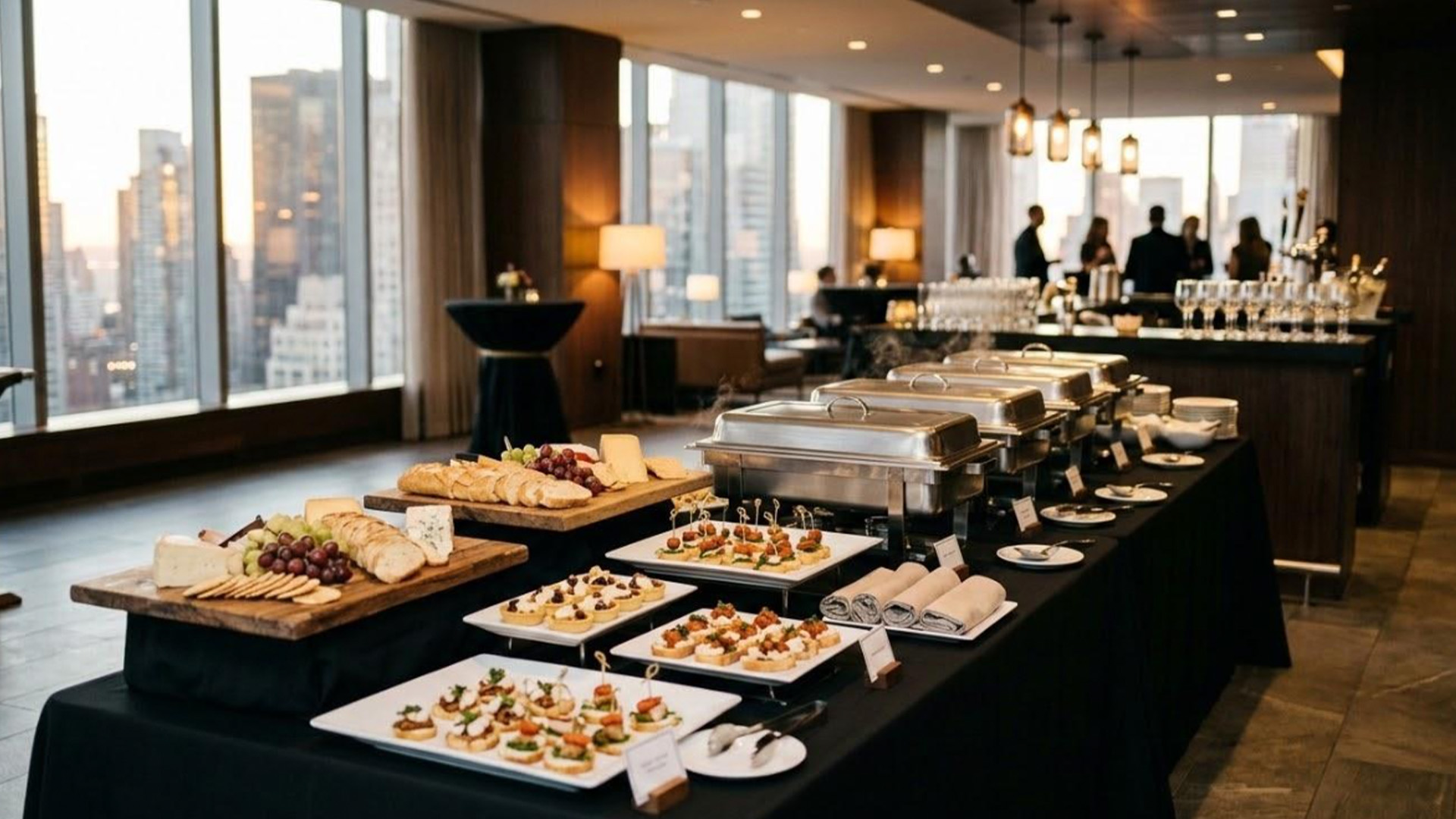
Presentation surfaces are the second. Food on standard-issue trays looks different than food on porcelain, wood, and steel — and at a client-facing event, the surface matters as much as the food on it. The difference shows up across the room during the event, and again in every photo that gets shared afterward. Metro's Executive Presentation service sets food on porcelain platters, handcrafted wood trays, and stainless steel chafing dishes with black linens for exactly this reason.
The visible-versus-held ratio is the third. A station that looks abundant at minute five and depleted at minute forty-five looks like a kitchen running out of food. A station held at consistent fullness — replenished from the back before food runs out — looks like a kitchen with reserves.
Guests don't catalog details consciously. They register impressions, and the impressions trace back to specific service decisions.
Food temperature is the most visible. Hot items held too long lose their structure; cold items left out lose their edge. Stations refreshed on a schedule — not when they look depleted, but before — keep the food at the quality it left the kitchen.
Beverage cadence is the second. A drink in hand within two minutes of arrival sets the entire event's pace. A bar that backs up at minute fifteen sets a different one. The right number of bartenders and beverage stations for the headcount isn't a guess — it's a ratio, and it scales with the event. Metro's bar service team plans staffing against guest count for this reason.
The third is service presence. Servers who circulate without intruding, who clear plates before the table looks cluttered, who refill water without being asked — this is the attention guests notice as “the event was well run” without ever pointing to a specific moment.
The third layer is the one the room and the guests will never see, which is exactly why the decisions inside it have to be airtight.
Vendor handoffs are the first. Florists, AV, catering, photography, and venue staff arrive in sequence — and the sequence has to be coordinated so that no two vendors are setting up in the same square footage at the same minute. The schedule that matters is the back-of-house schedule.
Staff repositioning is the second. As the event moves from arrival into reception into program, the staff need to shift with it: bartenders pulled forward for the cocktail hour, servers staged for plated service, hosts moved toward the program area. A planner doesn't run this from a clipboard — they run it from cues they've agreed on with the captain in advance.
Timeline drift is the third. Programs run long. Speakers run late. The food window doesn't extend itself. The planner who has built fifteen minutes of buffer into each transition has the room to absorb a twenty-minute delay. The one who hasn't is making decisions on the floor that should have been made on the run-of-show.
A corporate event that earns the long-term spot on a planner's calendar is one whose decisions have been made at every layer — the room, the guests, and the back-of-house. The guests will remember an evening that worked. The planner will remember a vendor who made it work.
For client-facing events, that vendor is the one who can show their work across all three layers, before the event and on the floor. Metro Catering has been running corporate events in NYC since 1981. Get in touch to walk through your run-of-show.
Author
Chris Zamfotis
Managing Partner, Metro Catering
Chris Zamfotis is the Managing Partner at Metro Catering, a New York City catering company serving corporate offices, private events, and businesses across Manhattan. With a focus on reliable service, thoughtful menu planning, and polished presentation, Chris helps lead Metro Catering’s approach to modern corporate catering, from daily office lunches to executive meetings, happy hours, and large-scale events.

Metro Catering has been NYC’s trusted corporate catering provider since 1981, offering fresh, high-quality meals for office lunches, corporate events, and workplace dining—delivered on time, every time.

