
Cinco de Mayo office lunch catering setup with platters of tacos, rice, and beans
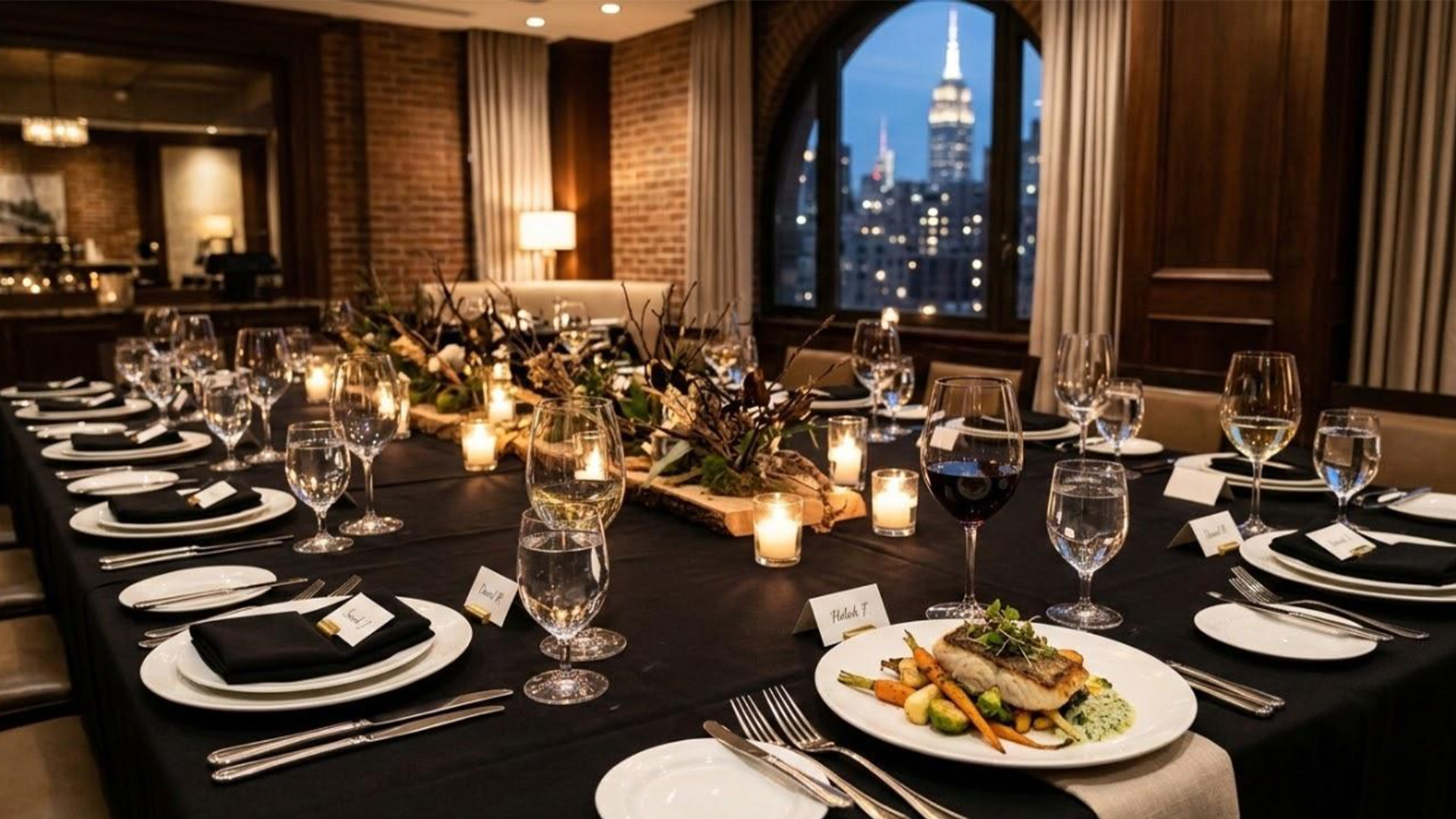
Corporate client dinner setup at a Midtown Manhattan venue — plated entrées, wine glasses, and centerpiece on a long banquet table with black linens

What Makes a Quarterly Client Dinner Worth Repeating

Chris Zamfotis
May 28, 2026

Client dinners have the opportunity to shape your company's relationship with its most important customers. From picking the venue to building the menu and planning the bar, as the event planner you want to make sure that the client and your company's leadership are in the best possible environment to build a close rapport.

This post is about the four moves at this dinner — booking, menu, beverage, and follow-up — that make it the first of many. By the end you'll know what to lock in at this dinner to turn it into a quarterly tradition, whether you're running a client dinner for the first time and hoping it sticks, or already running them quarterly and looking for ways to make the next one better.

1. Book the next dinner before this one ends

If you want this dinner to become a series, propose the next one before guests leave. Once everyone's home, the next dinner has to fight for calendar space all over again.

  • Lock the next quarter’s date before this dinner ends. “Same time, second Wednesday in August?” is a question that gets answered at the table; the calendar invite goes out the next morning.
  • If the date isn’t ready, lock the month and the season. “Mid-August, somewhere with a rooftop” is enough commitment to send a hold-the-date the next morning.
  • The follow-up email goes out within 24 hours with the date or month, the venue or shortlist, and one menu thread from this dinner (“someone at the table mentioned the spring lamb — I’ll plan around that for August”).

Booking the next dinner at the table works best with a caterer set up for multi-event clients. Metro Catering has been running NYC corporate client dinners since 1981 and plans across the year for clients with a quarterly cadence — so the date you propose tonight can be confirmed before your follow-up email goes out tomorrow.

2. Plan the menu across the year

A client dinner that runs four times a year needs a menu plan that runs four times a year. Otherwise you reorder the spring menu in October, or send the same braised short rib to the same client three quarters in a row.

  • Pick a signature element that stays across quarters — a dish, a course, a serving style. The wood-board appetizer course, the family-style entrée, the dessert flight. This is what the client will associate with your dinner.
  • Vary the rest by season. Spring leans toward green and bright; summer toward grill and chilled; fall toward braise and harvest; winter toward stew and root. The seasonal shift gives every dinner a different shape without losing the signature.
  • Brief the caterer on the four-dinner plan early. When the caterer knows you’re running four dinners with the same client this year, they’ll help you shape the variation — and flag if the August menu is too close to the May one before you serve it.

3. Plan what people are drinking and when

Plan the drinks the same way you plan the food.

  • Build the bar around how the night moves. Cocktails on arrival. Wine with dinner — usually two reds, two whites, sparkling for toasts. Something after dinner if the conversation runs long: a digestif, an espresso martini, decaf coffee.
  • Ask the caterer or venue for a signature cocktail tied to this dinner. The signature gives every dinner a moment that’s specific to the night, and gives the client something to photograph that they didn’t expect.
  • Set the bartender ratio. A working starting point is one bartender per 40 guests for a one-bar setup, one per 75 for two-bar service.
  • Decide what the non-drinkers are drinking too. A mocktail, sparkling water with a garnish, alcohol-free beer or wine. The third of the table that isn’t drinking shouldn’t be holding a Coke.

4. Talk through what worked before the next one

The dinner is fresh in your head for about three days. After that, you remember the broad strokes and forget the details — and the details are what shape next quarter’s dinner.

  • Write down what you remember within 48 hours, while the dinner is still fresh. Three things: what worked (a course, a moment, a guest reaction), what didn’t (a timing miss, a bar bottleneck), and one thing the client said about the dinner without being asked. The last one is the most useful for next quarter.
  • Send a follow-up email to your caterer within the same week. The caterer’s memory of the night is fading on the same clock as yours, and they’re the only other person who saw the dinner from both sides.
  • Build next quarter’s menu and beverage program off the notes. The course someone called out becomes the centerpiece of the August dinner. The bar that bottlenecked at the second cocktail gets one more bartender.

Running quarterly client dinners with Metro

Metro Catering has been running corporate client dinners across Midtown since 1981, with a kitchen at 21 W 38th St. The team handles full-service dinners — venue setup, menu, full bar service, service staff, and cleanup — and will plan across the year if the dinner is going to be quarterly.

To book a corporate client dinner for June, reach out before the end of May. The dinner you run in June is the one that sets the pattern for the three after it.

Author
Chris Zamfotis
Managing Partner, Metro Catering

Chris Zamfotis is the Managing Partner at Metro Catering, a New York City catering company serving corporate offices, private events, and businesses across Manhattan. With a focus on reliable service, thoughtful menu planning, and polished presentation, Chris helps lead Metro Catering’s approach to modern corporate catering, from daily office lunches to executive meetings, happy hours, and large-scale events.